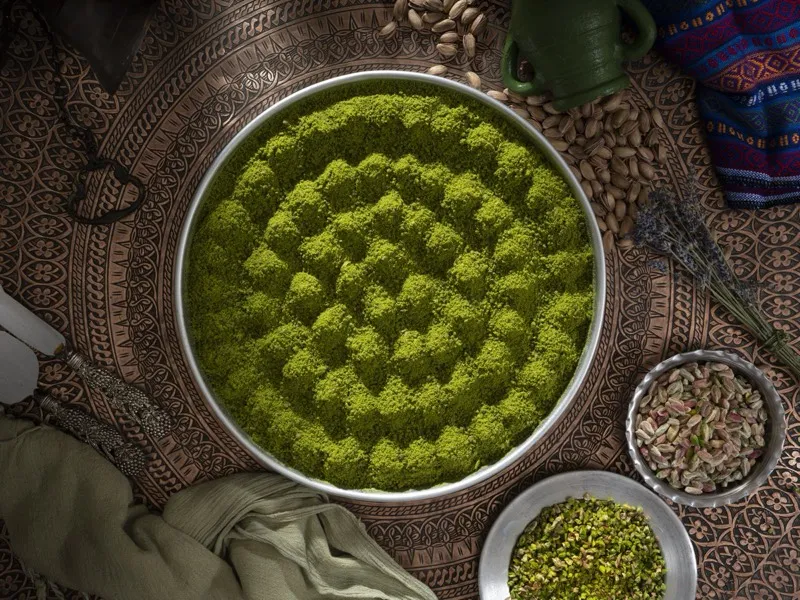
Few confections in the world carry the weight of history quite like baklava. This layered pastry of paper-thin dough, premium nuts, and fragrant syrup has been captivating palates for centuries — a sweet that has graced the tables of empires, been gifted between royalty, and endured as one of the most beloved desserts across continents.
But what is the true origin of baklava? How did this ancient delicacy evolve from a palace luxury into the artisan baklava we know and love today? Let's trace the fascinating journey of this extraordinary confection.
Ancient Roots: Where Baklava Began
The exact origin of baklava is a subject of spirited debate among food historians, and for good reason — this is a confection that has been claimed and cherished by dozens of cultures across the Mediterranean and Middle Eastern world. What we know is that the fundamental concept — layered dough filled with nuts and sweetened with honey — dates back thousands of years.
Ancient civilizations across the Mediterranean basin were already creating layered pastries with nuts and honey as early as the 8th century BCE. The Assyrians are believed to have baked one of the earliest known versions — layers of thin bread dough filled with chopped nuts and drenched in honey, reserved for special celebrations and religious ceremonies.
As trade routes expanded and cultures intermingled, this basic concept traveled and evolved. Greek sailors and merchants encountered versions of the pastry throughout the eastern Mediterranean, and it's widely credited that Greek bakers refined the dough-making technique, developing the paper-thin phyllo (from the Greek word for "leaf") that would become baklava's defining characteristic.
A Pastry of Empires
Throughout the centuries, baklava became a confection associated with wealth, celebration, and power. Across the great empires that spanned the Mediterranean and beyond, baklava was refined, regionalized, and elevated to an art form.
Royal kitchens employed dedicated pastry artisans whose sole purpose was perfecting the craft of luxury baklava. The art of stretching dough to translucent thinness became a mark of a master confectioner — a skill passed down through generations of craftsmen. In palace kitchens, baklava was prepared with the finest pistachios, walnuts, and almonds, sweetened with wild honey, and scented with rose water and orange blossom.
Baklava was so prized that it was often prepared for festivals, weddings, and diplomatic occasions. Trays of baklava were sent as gifts between noble houses — a tradition of luxury gifting that endures to this day.
Regional Variations: A World of Baklava
One of the most beautiful aspects of baklava's history is how each culture made it their own. As the pastry spread across the Mediterranean, North Africa, Central Asia, and beyond, regional variations flourished:
- Pistachio baklava — The classic, featuring vibrant green pistachios layered between impossibly thin sheets of phyllo, drenched in a light sugar-and-rose-water syrup
- Walnut baklava — Rich and earthy, often flavored with cinnamon and clove, popular across the Balkans and Caucasus
- Almond baklava — Delicate and fragrant, commonly found in North African variations, often scented with orange blossom water
- Cashew and hazelnut varieties — Modern interpretations that push the boundaries of tradition
- Bird's nest (Bulbul Yuvası) — Rolled and shaped into nests, filled with chopped pistachios — a stunning visual presentation
Each region brought its own nuances — different nuts, different syrups, different spices, different shapes. But the core remained the same: layers of craftsmanship, layers of flavor, layers of history.
The Art of Modern Artisan Baklava
Today, artisan baklava is experiencing a remarkable renaissance. As the luxury food movement has grown — driven by consumers who value craftsmanship, quality ingredients, and authentic techniques — baklava has emerged as one of the world's most exciting artisan confections.
At Sulta Rosa, we honor this centuries-old tradition while bringing it into the modern era. Our baklava collection is handcrafted daily at our atelier on Lincoln Road, Miami Beach, using techniques that have been refined over generations:
- Hand-stretched phyllo — Each sheet is stretched to translucent thinness, a process that requires extraordinary patience and skill
- Premium nuts — We source the finest Sicilian pistachios, quality walnuts, and carefully selected hazelnuts
- Natural sweeteners — Our syrups are made with real honey, pure rose water, and orange blossom — never artificial flavors
- Small-batch production — Every tray is crafted by hand in small batches for peak freshness and quality
Baklava at Sulta Rosa: Our Collection
Our baklava menu reflects both the depth of tradition and the spirit of innovation that defines Sulta Rosa:
Classic Styles
Pistachio Diamond — Our signature cut, featuring layers of handmade phyllo and premium pistachios, finished with a light honey-rose syrup. Walnut Diamond — Rich, aromatic, and deeply satisfying, with a hint of warm spice.
Nest & Roll Varieties
Pistachio Nest — Delicate rolls of shredded phyllo cradling whole pistachios, soaked in honey. Walnut Nest — A beautiful presentation that makes an ideal gift or centerpiece.
Contemporary Creations
We also push boundaries with modern interpretations — hazelnut and chocolate combinations, citrus-infused syrups, and seasonal specials that surprise even the most devoted baklava connoisseurs.
Why Luxury Baklava Is the New Fine Dessert
In a world where Godiva chocolates and French macarons have long dominated the luxury sweets conversation, luxury baklava represents something refreshingly different. It's a confection with deep cultural roots, extraordinary craftsmanship, and a flavor profile that's complex, nuanced, and utterly addictive.
Paired with a glass of Italian Moscato d'Asti or a French dessert wine from our wine bar, artisan baklava becomes an elevated experience — one that rivals any Michelin-starred dessert course. Discover our favorite wine and confections pairings.
"Baklava is more than a pastry — it's a story told in layers. Every sheet of phyllo, every nut, every drop of honey carries centuries of tradition and craft."
From ancient palace kitchens to our atelier at 821 Lincoln Road, Miami Beach, the story of baklava continues to unfold. At Sulta Rosa, we're proud to be writing the next chapter — honoring the past while creating something entirely new.
Welcome to a new world of confections. Welcome to Sulta Rosa.
Taste Centuries of Craft
Explore our full collection of artisan baklava — handcrafted daily with premium ingredients.
Shop Baklava